

Wool Felt Properties & Facts
Felt made from wool is an important material in interior design and the crafting of accessories. How is wool felt created, and what makes it so valuable to us?
What exactly is wool felt?
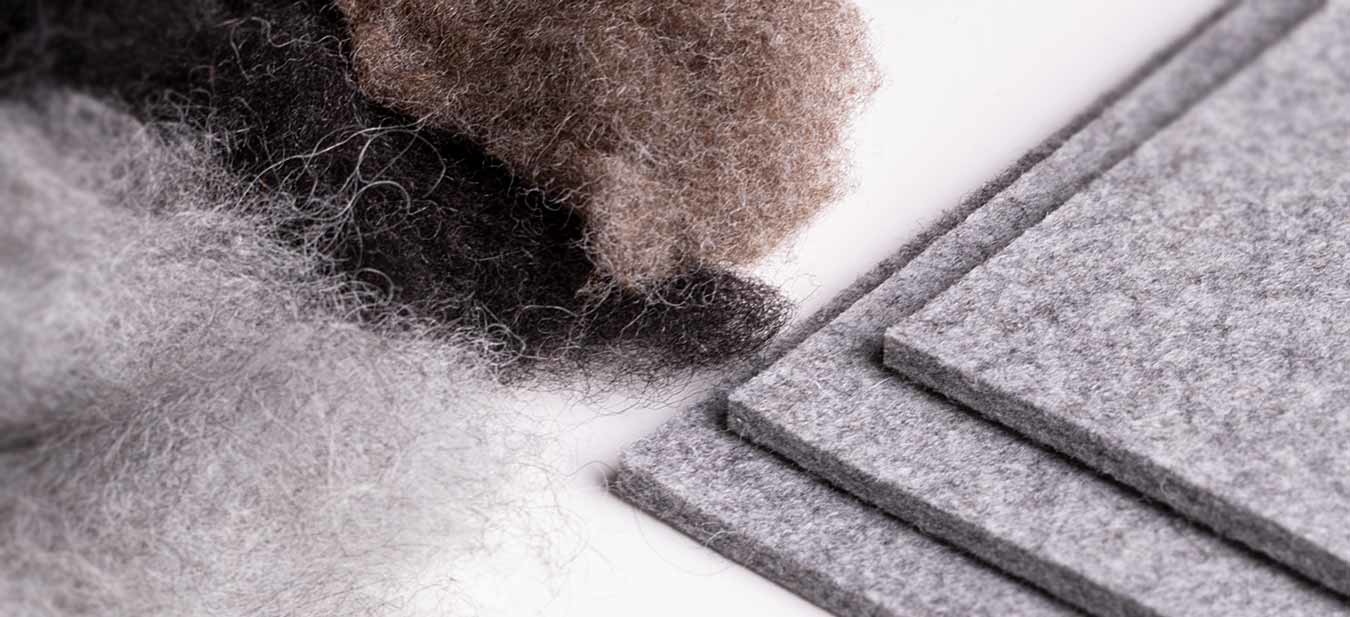
Wool felt belongs to the category of non-woven textiles and is made from sheep's wool or virgin wool. It is probably one of the oldest fabrics in human history. Through moisture, warmth and friction, the wool can be felted, compacted and pressed together. The result is an even, flat fabric without any woven structure: wool felt.
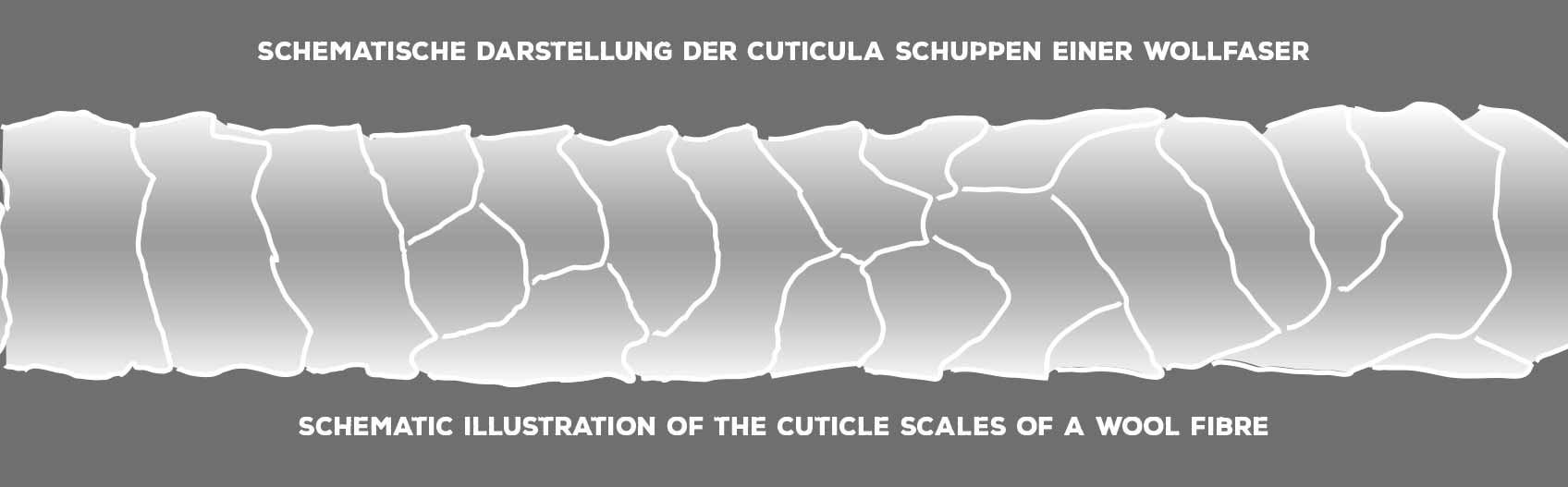
Why does wool felt together?
Wool fibers are covered with scaly plates on their surface (cuticle scales) that act like tiny barbs. When exposed to moisture and warmth, they open up. When friction is then applied to the fibers, they interlock and become firmly entangled with one another.
How is felt made?
First, the raw wool is cleaned and carded (prepared into a fleece). The wool fibers are then firmly bonded, randomly entangled and interlocked through mechanical fulling and hammering combined with warm water. The process can be accelerated and intensified with soapy water. This can be done both industrially on a large scale and by hand for artistic purposes. Depending on the type of wool and the duration and intensity of the processing, the felt can range from fluffy and soft to board-hard. The felt shrinks in the process: its surface area is reduced by up to 50%.
How does felt get its color?
There are two different methods:
- The raw felt is produced in natural wool-white and then dyed in a dye bath.
- The color of the felt is created by blending different natural wool shades.
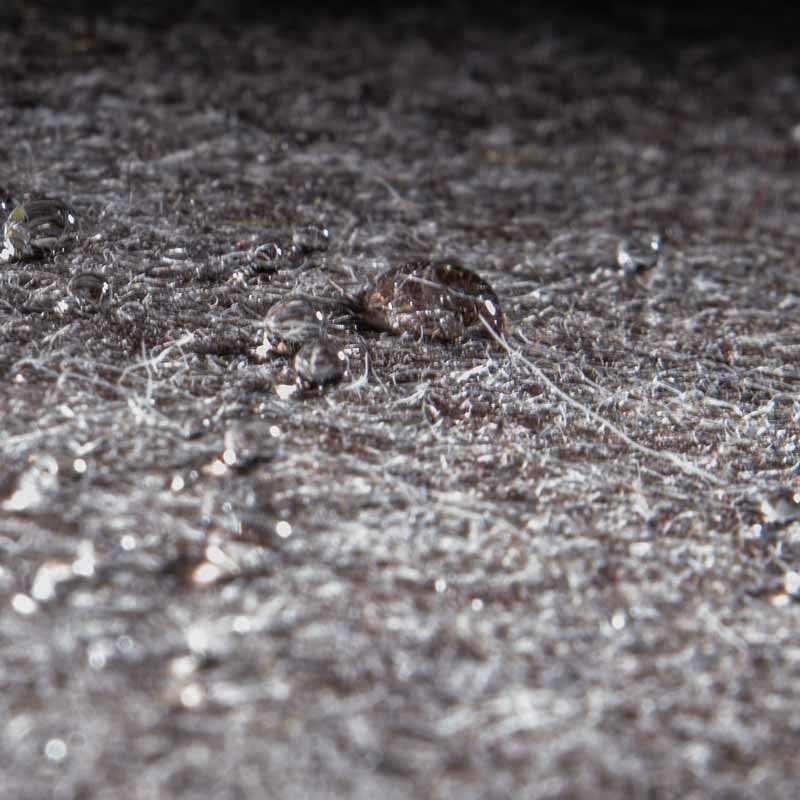
Why is wool felt water and dirt repellent?
Thanks to the lanolin contained in the felt (also known as wool wax or wool grease), water drops bead up on the surface before they can soak in. They can simply be shaken or dabbed off. The natural layer of grease also makes it harder for dirt to penetrate the fibers and soil the felt. You can think of it as being similar to the lotus effect. In addition, wool felt hardly builds up any static charge, because the fiber naturally always retains some moisture – so it also attracts far less dust than synthetic fabrics.
Why is felt flame resistant?
Wool is a highly heat-resistant natural fiber. Even under intense heat it does not burn, but chars at around 320°C (608°F). The density of the felt also makes it difficult for oxygen to reach the wool, which further inhibits combustion. To avoid any damage to the products, you can expose wool felt to temperatures of up to approx. 220°C (428°F).

Why does wool felt absorb sound?
The fibers of wool felt dampen noise and swallow sound: when sound waves hit the felt, they are not reflected as they would be by a hard surface. The soft surface of the felt, with its irregular fibers and trapped air pockets, absorbs the sound. Using wool felt and wool felt products is therefore an easy way to bring a little more calm into your rooms. Scientifically confirmed in a study on the sound absorption of sheep wool and a study on sound-absorbing wool materials.

How does the thermal insulation of felt work?
Interestingly, it is not actually the wool itself that is responsible for the insulating properties of felt, but the air trapped inside it, which acts as a poor conductor and prevents heat exchange. The wool fibers enclose the air so that it can barely circulate within the felt. In this case, the wool merely serves as a "natural carrier" of the air. That is why felt is so comfortable in both warm and cold conditions. Read more in a study on sheep wool insulation materials.

Why does wool felt regulate moisture and feel gentle on the skin?
Wool felt is permeable to water vapor and can transport moisture along the wool fiber. It can absorb and store up to 50% of its own weight in water vapor and then gradually release it back into the surroundings. It does not lose its insulating properties in the process. Felt is soft, feels pleasant to the touch and, as a natural material, does not cause any skin irritation.

Can wool purify the air and break down pollutants?
Many of our living spaces contain building materials that release formaldehyde into the indoor air. The scientific thesis by Stefan Thomé from 2006 (in German) demonstrated that wool can bind several harmful pollutants: felt contains the wool protein keratin, which, together with the amino acids lysine, tyrosine and tryptophan, absorbs pollutants from the indoor air. In this way, wool felt can contribute to healthier and cleaner indoor air.
Why does wool felt protect?
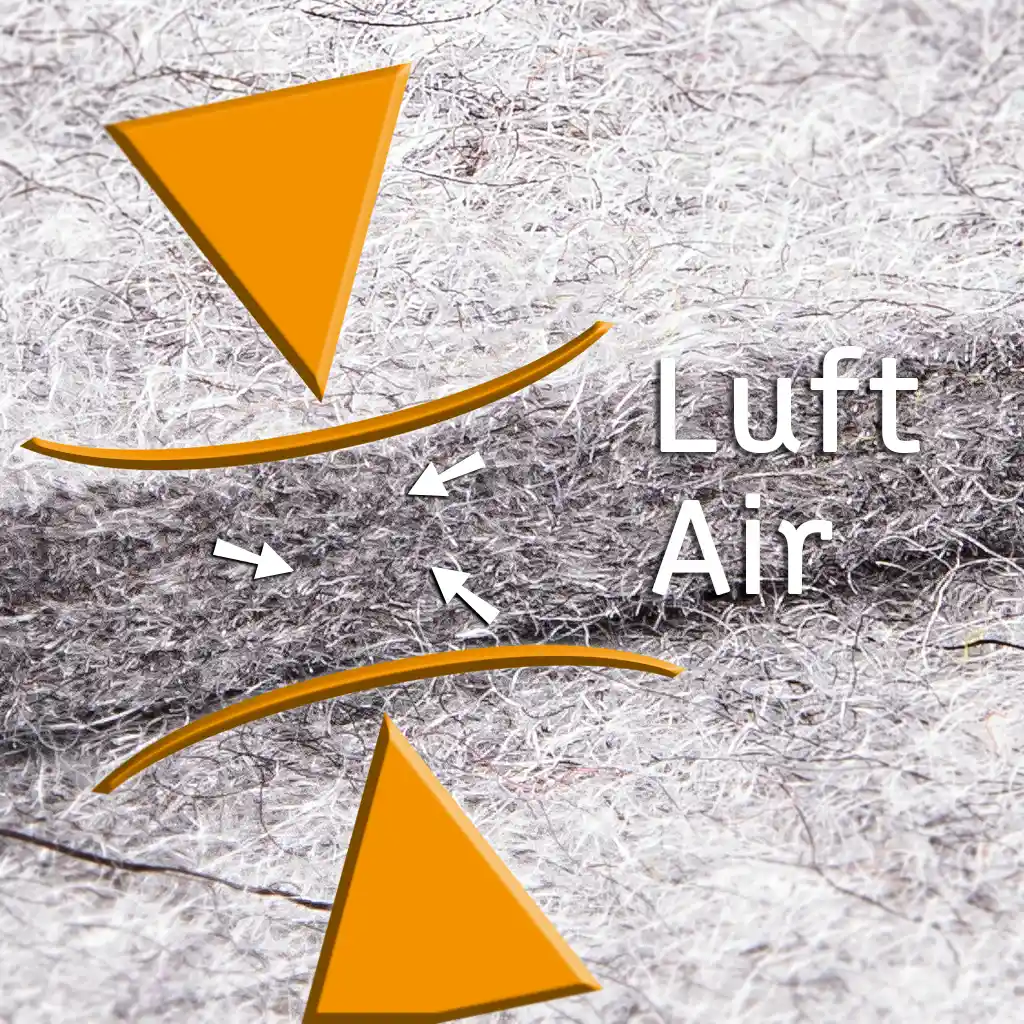
Felt protects against the wear and tear of everyday life: pressure, drops, impacts, scratches, moisture. Wool felt consists of interlocked fibers with air pockets in between. On impact, the fibers compress, the air distributes the energy across the surface, and the felt springs back. The wool fiber yields – and straightens up again. Naturally, time after time. And because wool fiber is softer than aluminum, glass, plastic or wood, it cannot scratch any surface.

Why does wool felt stay odor-free?
Wool barely absorbs odors such as sweat, smoke or cooking smells – and even partially breaks down odor molecules. This is due to the wool protein keratin, which binds odor compounds, combined with the fiber's ability to absorb and release moisture. In most cases, simply airing wool felt outside is enough – no washing required. Especially for bags, sleeves and home accessories in daily use, this keeps the felt fresh for a long time.

Is wool felt biodegradable?
Wool is a natural, renewable raw material. Felt and wool can be broken down into their basic components by microorganisms. In this process, minerals and nitrogen are released, much like with horn shavings. This is why wool is also used as a fertilizer (in German). It is biodegradable and compostable, returning to the natural cycle.