

Leather defects
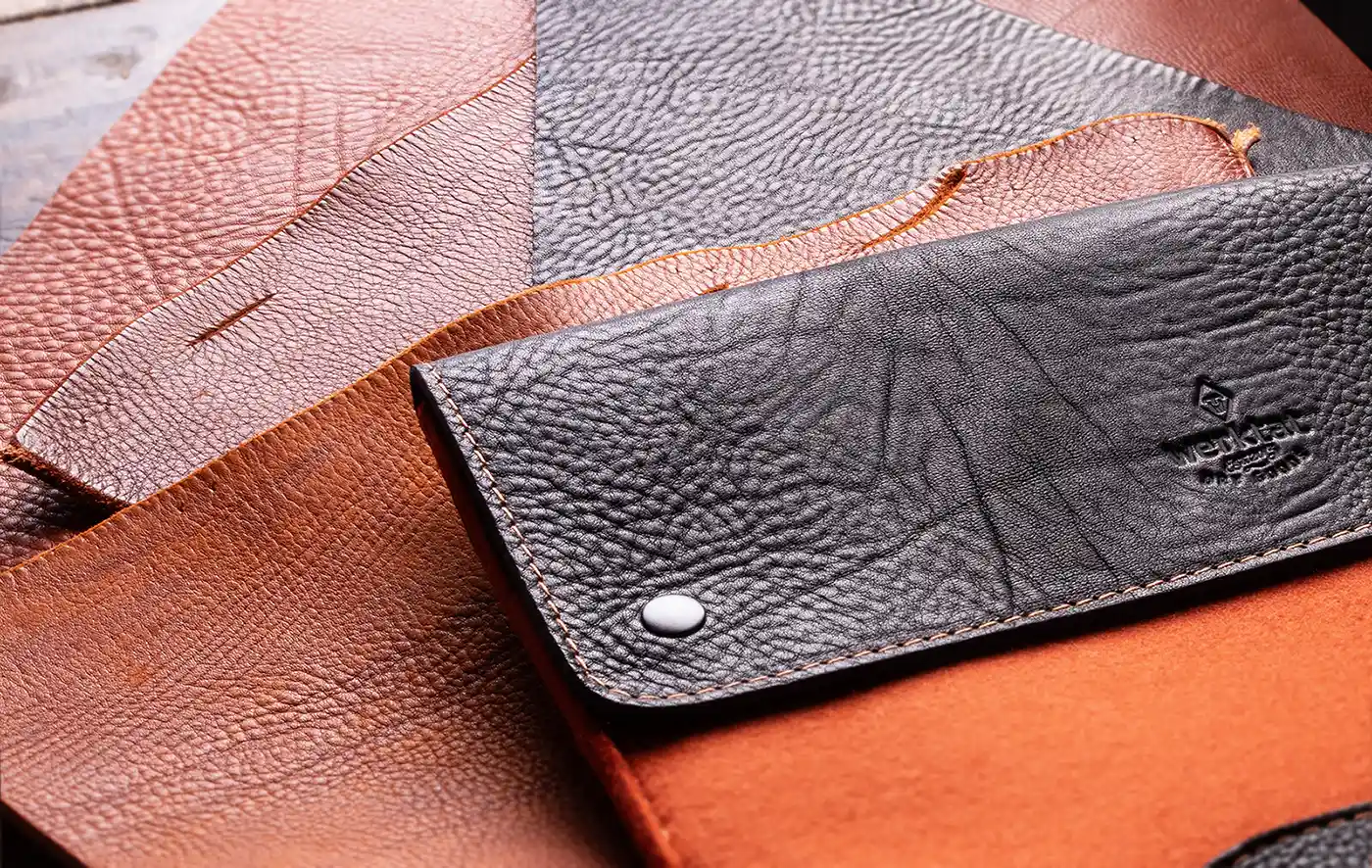
Leather is a natural product – and that's exactly what makes it special. Folds, scars, colour play are not a sign of lower quality but proof of authenticity. Which marks belong to leather, which never make it into a product – and how we recognise a good hide:
What flaws are there in leather?
Cuts and tears from processing the rawhide. Insect bites leave their marks. Scars come from injuries. Growth, movement, pregnancy: at the neck and belly, the hide shows folds and stretch marks. The dyeing can be patchy: dark spots that took too much colour, or pale ones that look faded. The grain, too, can shift abruptly: where limbs touch the body, the hide is dull and matt like fine sandpaper – right next to it, fully structured. And there are spongy areas with an empty, loose structure – usually on the belly.
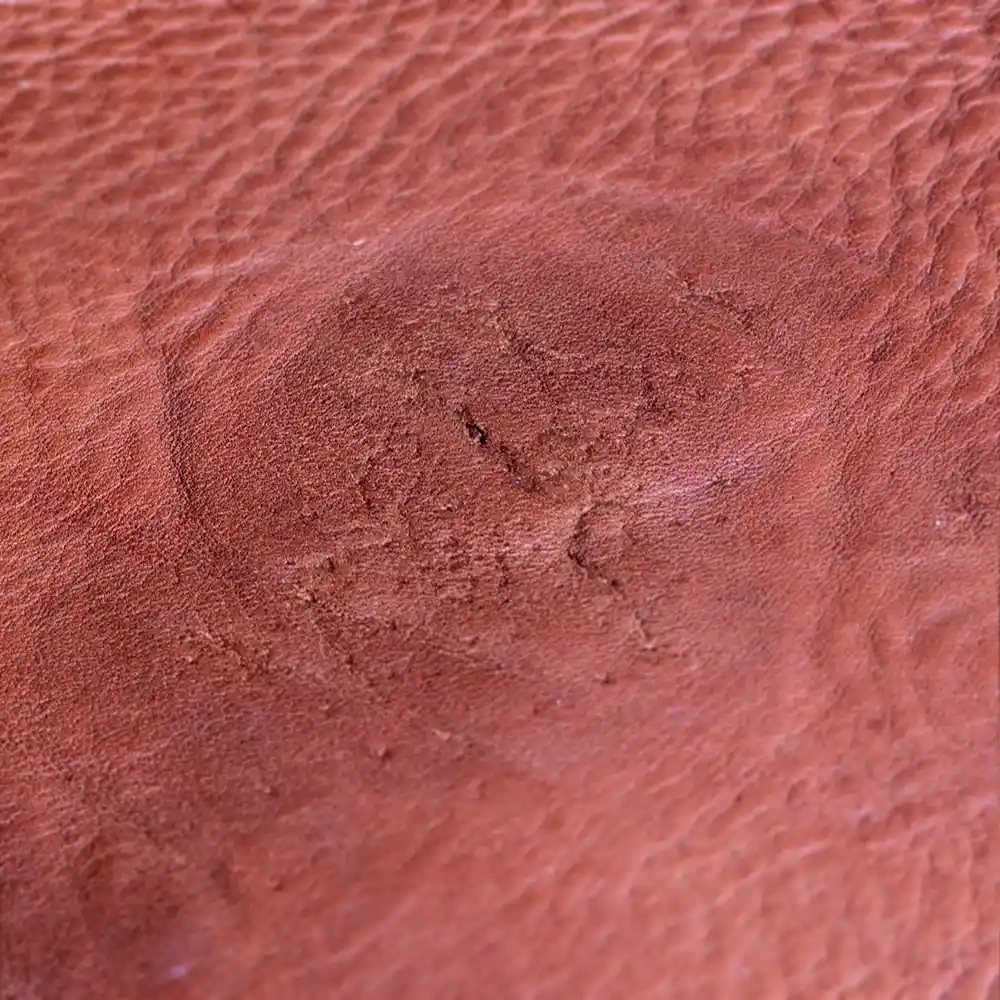
Insect marks: small punctual holes, e.g. from insect bites
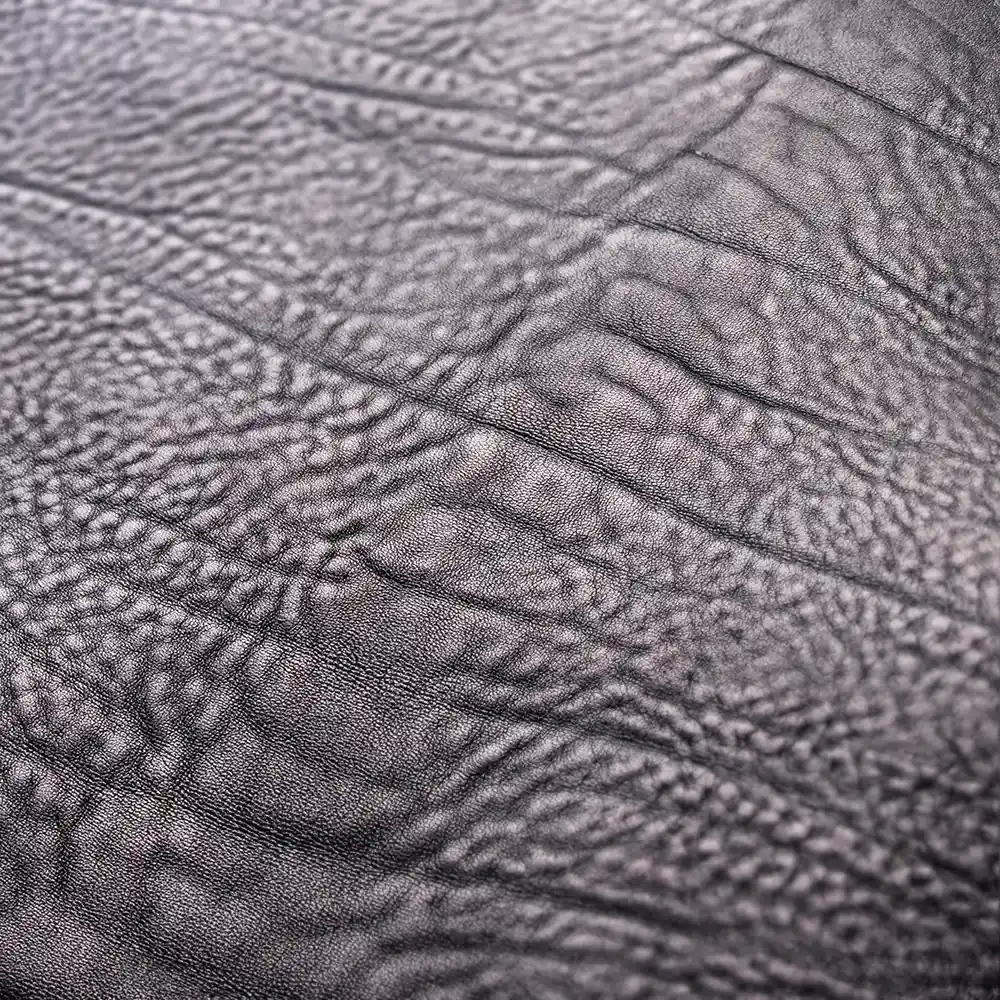
Coarse folds or scars – often caused by the animal's life, e.g. lying down, fighting or moving.
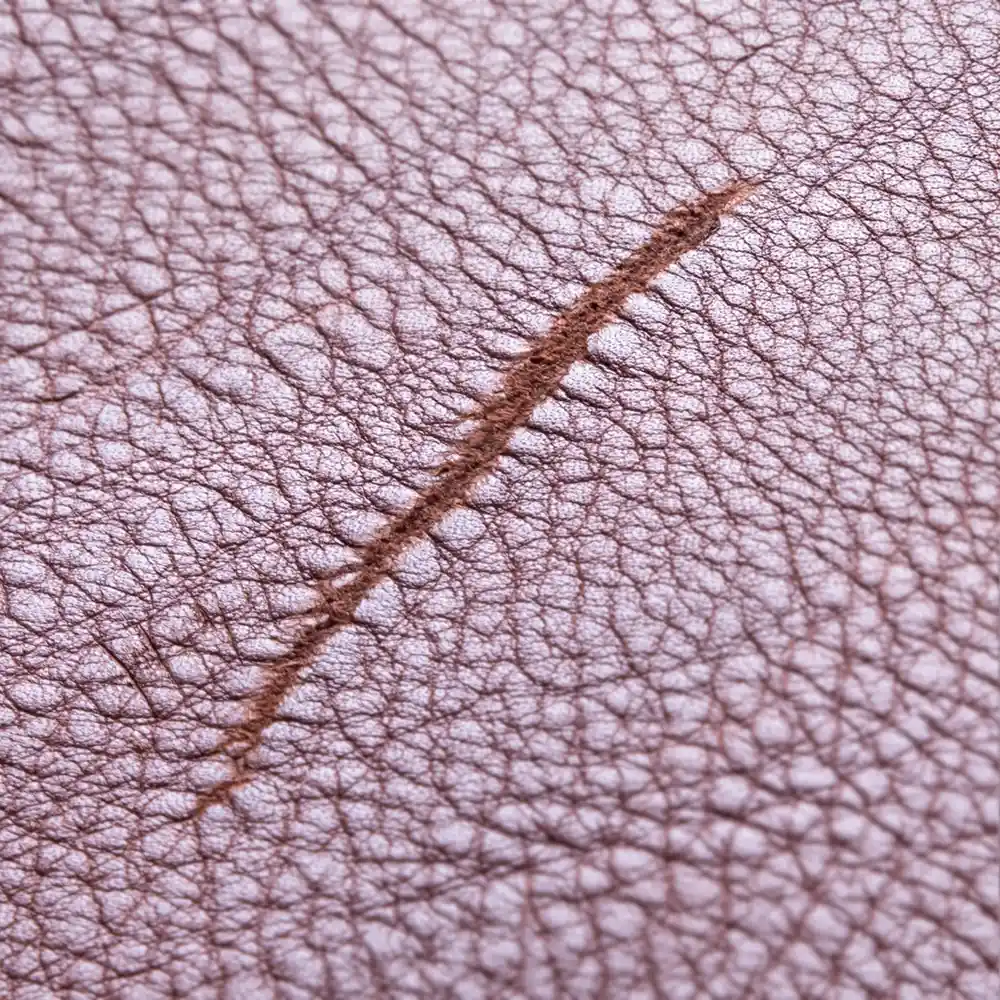
Cuts and tears – from processing the rawhide
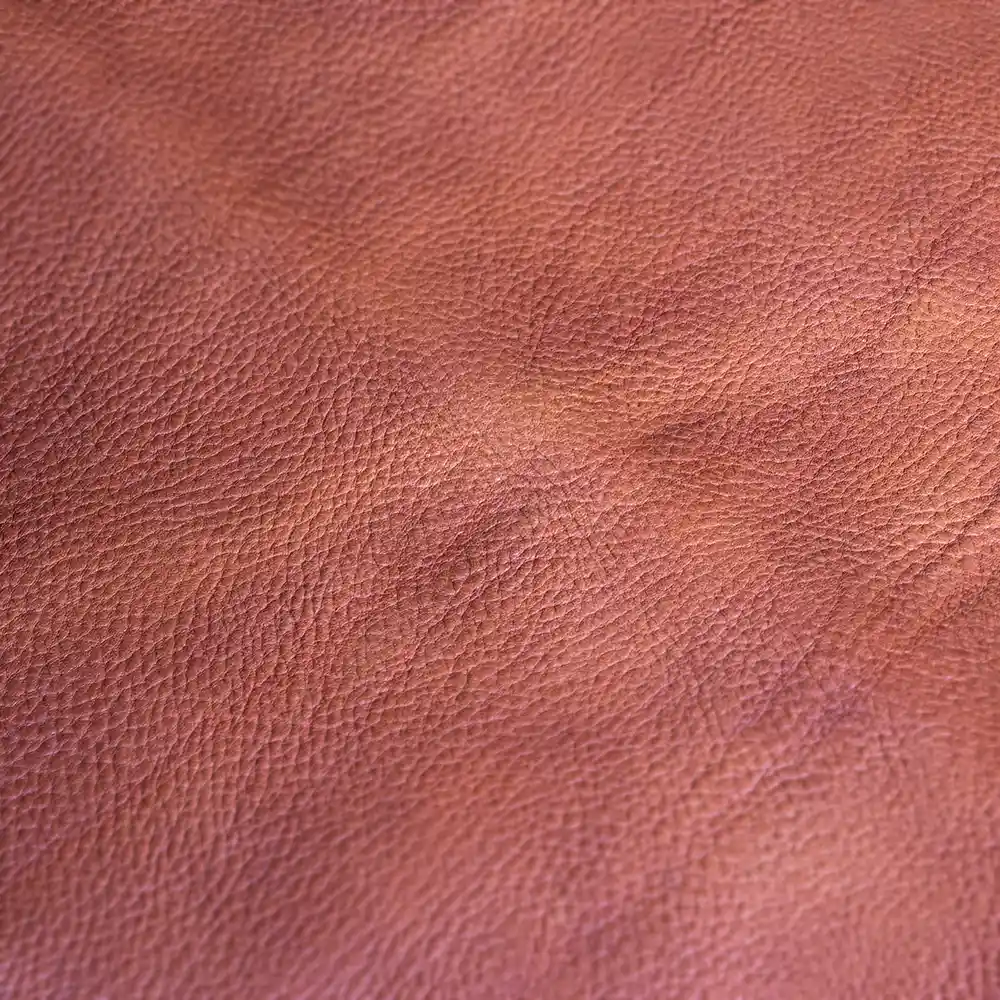
Patchy dyeing – dark spots with too much colour, pale ones that look faded
Our approach to so-called "defects"
In conventional production, hides with visible irregularities are often sorted out – valuable material goes unused, although it is functionally sound. We don't see the flaw, we see the potential: products with character. When a hide is used as completely as possible, waste shrinks, and everything that went into it – raw material, tanning, water, energy – isn't thrown away. And the opposite of mass production emerges: every product is one of a kind.
How do we recognise a good hide?
With leather, quality is above all a question of usability: how much do we get out of this hide? Anything from over 90% to a total loss. Much of what sounds like a quality criterion isn't one. Uniform thickness? Standard today – every hide is split to the desired gauge before tanning, and whether it comes out a tenth of a millimetre thicker or thinner makes no difference in craft work. Feel and grain? A matter of taste – they determine the product, not the quality.
The inspection itself is visual and takes a few seconds per hide: we look for the flaws – the fewer there are, the more of the hide becomes product. We don't need a lab; we're not an industrial operation, and in the end only one thing counts: our customer has to be happy.
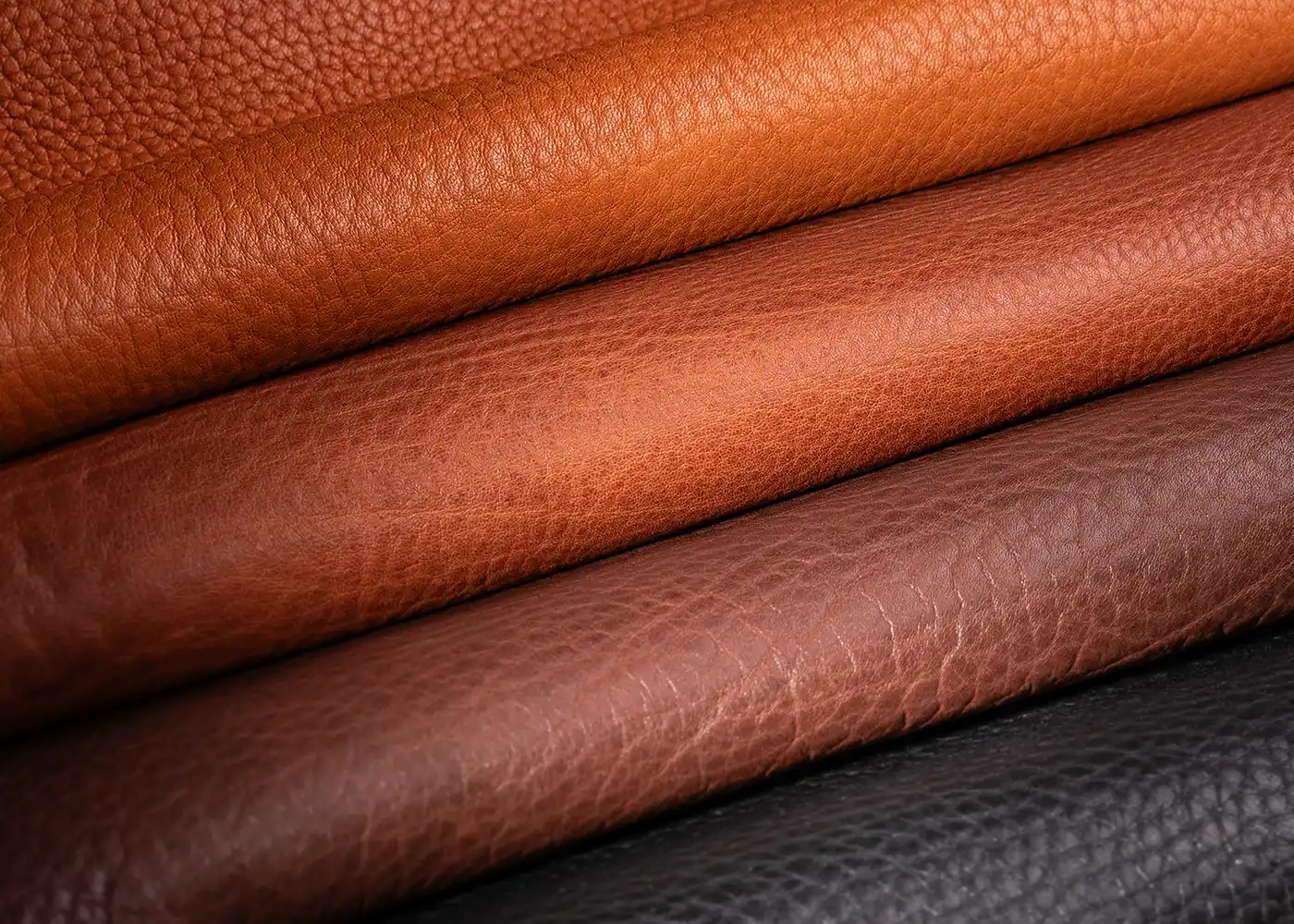
Why is brown never just brown?
Leather is a natural material: every hide takes the tannins differently, every batch of tannins turns out differently – add temperature, dye, and the human eye. And the colour only shows once the hide is finished and dry. That's why, with every order, we check whether the new batch matches the old one. Brown is only brown once we've laid it next to the old brown.
Which part makes it into a product?
Insect marks, cuts and tears – we cut around these areas. Scars from injuries are judged case by case: some have healed cleanly and tell the animal's story, others simply don't look good. Here the eye decides.
And then there are the areas that are often the most beautiful part of a hide: striking folds, shifts in the grain, the strip along the spine. Whether they make it into a product isn't decided by looks but by our promise: products we sell with a sample photo have to match that photo – for those we use only calm, typical areas. One-of-a-kind pieces, on the other hand, are photographed as they are. There, a bold fold or a shift in the grain can play the leading role – whoever buys sees, in advance, the exact piece they'll receive. We don't hide the flaws – we deliberately put them front and centre. Our customers thank us for it: they treasure exactly these marks, because no second piece looks like theirs.
Using the whole hide
Our small leather goods don't exist by accident: we make them so that the areas between the flaws find their purpose too. Second-class leftovers they are not – a mousepad is made with the same care as a bag, just from the smaller area.


