

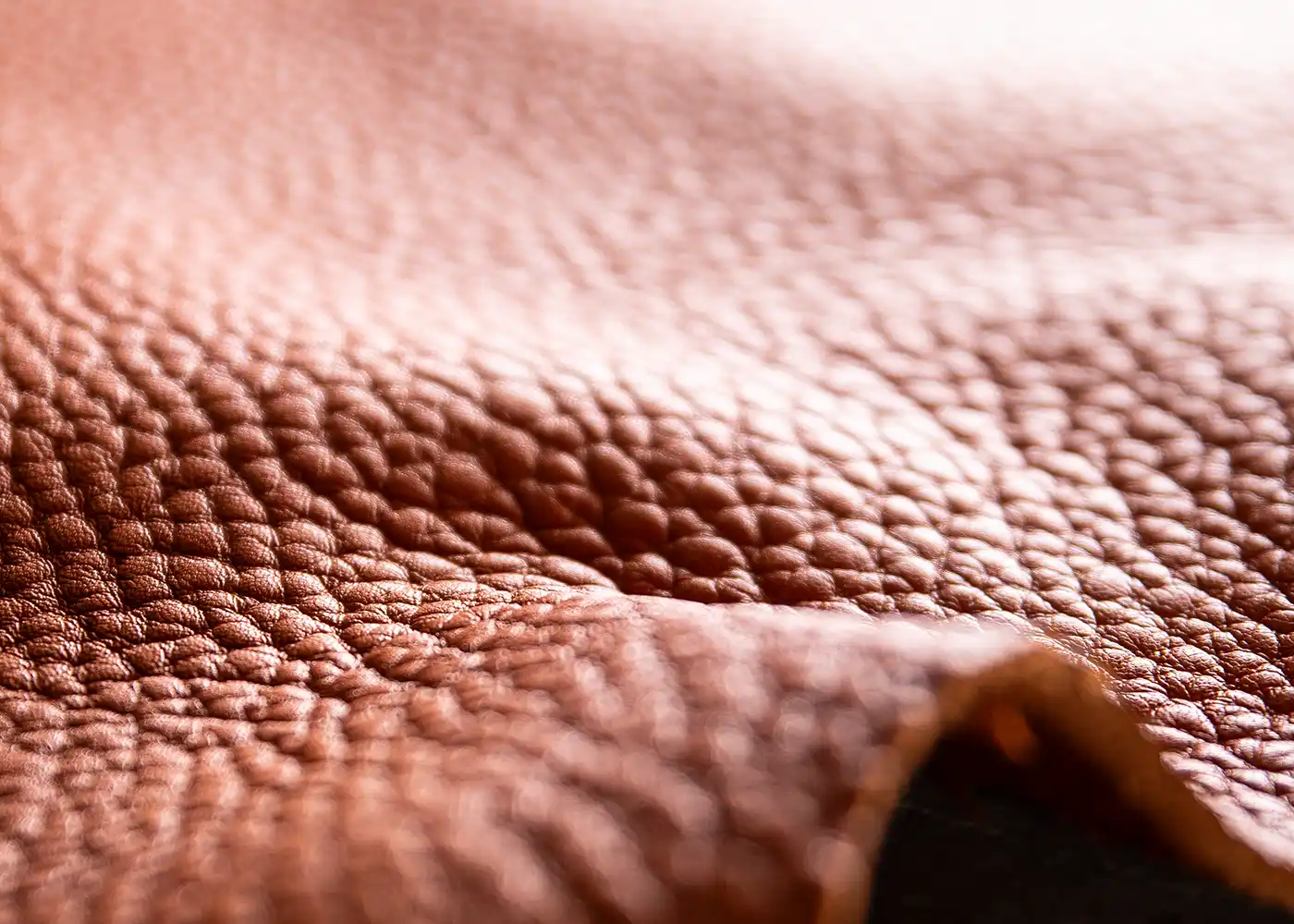
Vegetable-Tanned Leather
How do you recognize vegetable-tanned leather? First of all: by the smell. Visitors to our workshop notice it at the door — "it smells so good in here," we hear a lot. That's what leather smells like when it's tanned with plant-based tannins only.
What is vegetable tanning?
The tanning is done with plant-based tannins — barks and woods. Usually this happens in a drum: the movement makes the leather supple and soft, but also loosens the fiber structure a little — and contrary to many descriptions (Wikipedia included), drum tanning takes significantly less than 24 hours. Its counterpart is the rare pit tanning: the hide lies still for weeks — the leather becomes denser, firmer, stiffer. For our products, we buy leather from the drum: we need the suppleness. The tannins come from renewable resources, and no toxic substances end up in the wastewater. Retanning and fatliquoring are done with natural raw materials; the finish — where needed — with solvent-free, water-based lacquers.
Which animals does this leather come from?
From southern German cattle production. The hides are by-products of meat production – not waste, but a raw material with value.
Is there such a thing as organic leather?
Rarely. There are organically raised cattle — but their hides usually run through the same tanning drum as all the others; no separation takes place. True organic leather only exists when someone has an entire drum filled exclusively with organic hides — possible, but costly and rare. So wherever it says "organic leather," it's worth asking: a whole drum — or just wishful thinking?
Where does this leather come from?
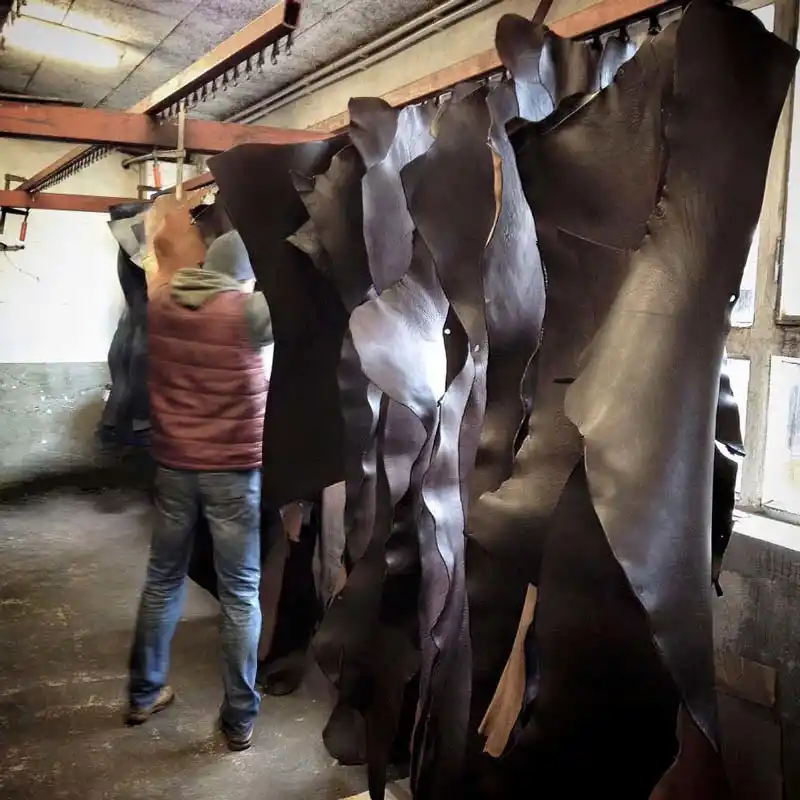
From two German tanneries: David Schmid GmbH in Metzingen and Leder-Fabrik August Renz KG in Tuttlingen. Both are family businesses with a long tradition, who supply us with small quantities in this quality. They have been sitting in the middle of their towns for generations, with old water rights. Those rights only survived because the work is done so ecologically — tanning in a town center wouldn't be possible any other way. Several times a year, we drive out, talk with the tanner about what's currently in stock — and pick out what can't be discussed over the phone: the special hides, piece by piece.
Why two tanneries?
Because no single one can do everything. One masters strong, vivid colors. The other the subtle tones and special surface structures — and it also shaves the finished hides thinner when a bag calls for it. On request, it seals the back with a finish that stops fuzzing — so you can pull your scarf out of an unlined bag, fuzz-free.
Why vegetable-tanned leather?
The honest answer: pure enthusiasm. I found the first tannery online, right at the beginning – and drove there. At first I was simply glad they would even talk to me. Then they showed me around: the old buildings, the old machines, the heavy manual work – I had never seen anything like it. And then the warehouse: treasures upon treasures, floor to ceiling. That never lets go of you.
Then there's the practical reason: these tanneries make leather you won't find anywhere else – and if the right one doesn't exist yet, it gets made for us. When the hides from our vegetable tanneries were too small for a new product, we tried conventional leather: bought single hides, made samples – the third attempt was okay. Or so we thought. But standing in front of the finished sample, the question came: Is this a werktat piece? No. So we had the leather made that it called for – vegetable-tanned, exclusively for us. Now everything fits.
And yes: whoever buys vegetable-tanned leather supports an old craft.